
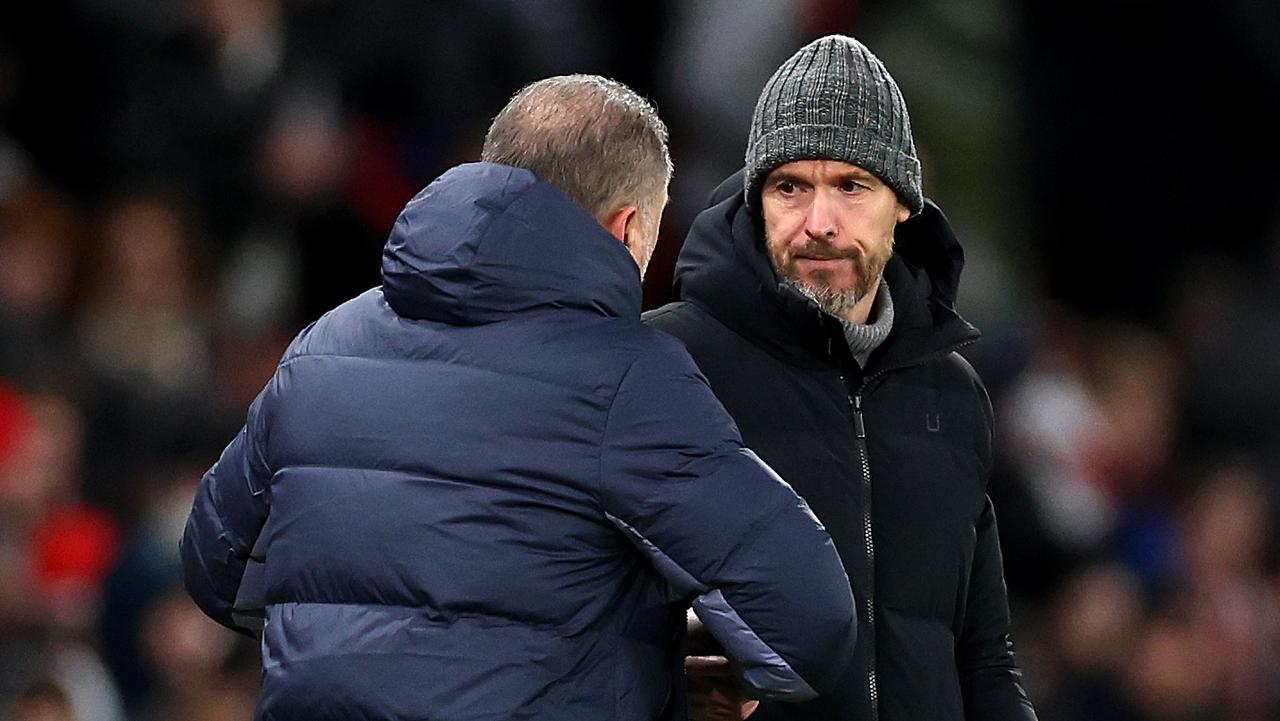
Manchester United has parted ways with manager Erik ten Hag following a disappointing start to the season, leaving the club positioned 14th in the Premier League and 21st in the Europa League. The decision to sack ten Hag was anticipated due to the team's poor performances, prompting discussions about accountability among players, management, and ownership.
Former players have voiced their concerns regarding the state of the club. Gary Neville, a former defender and current pundit, suggested that a significant defeat to Tottenham was a turning point that influenced the decision to dismiss ten Hag. He expressed that the lack of a clear playing style and identity has plagued the team during ten Hag's tenure, contributing to the management's decision.
Alan Shearer, another football legend, pointed to the club's ownership, particularly co-owner Sir Jim Ratcliffe, as a factor in ten Hag's fate. He noted that the club had already been exploring managerial options during the summer, which indicated a lack of alignment between management and the coaching staff.
Ten Hag's term was marked by a series of disappointing results, including heavy defeats and missed opportunities, culminating in a loss to West Ham. Former defender Rio Ferdinand likened the team's struggles to a boxer taking continuous hits without recovery.
With ten Hag's departure, Manchester United has now seen nine managers since Sir Alex Ferguson's retirement over a decade ago. Some fans argue that replicating Ferguson's success is an impossible task, while pundit Jamie Carragher countered that ten Hag had ample support and resources but ultimately failed to capitalize on the opportunity.
Carragher criticized the club's management for their slow response to ten Hag's declining performance, suggesting that better decision-making could have prevented wasted resources and time. He also highlighted the underwhelming performances of several high-profile signings during ten Hag's era, which further complicated the situation.
Roy Keane, a former captain of Manchester United, emphasized the need for player accountability, stating that in successful teams, players need to hold each other responsible for their performances.



0 Comments